
How to Get a CFIA Pet Export Certificate: Vet, Appointment, Timing
The short version: book the CFIA appointment first
Two separate steps get confused constantly. Your own veterinarian performs the exam and completes the certificate. The CFIA then endorses it, and that endorsement is what gives the document legal standing at the border. Endorsement is by appointment with an official CFIA veterinarian and cannot be done once your pet has left Canada. Most certificates are valid for 10 days from the exam, so book the appointment before you book the flight.
What a CFIA export certificate is, and why your pet needs one
If you are shipping your pet internationally from Canada, almost every destination country requires an official health certificate. In Canada, that means a document inspected and endorsed by the Canadian Food Inspection Agency (CFIA). Without this endorsement, your pet will not clear customs at the other end.
The CFIA health certificate confirms that a licensed Canadian veterinarian has examined your pet, that they are healthy and fit to travel, and that they meet the import requirements of the destination country. Here is what the process involves, how long it takes, and what it costs.
What your vet does, and what the CFIA endorsement adds
These are two separate steps that people often confuse:
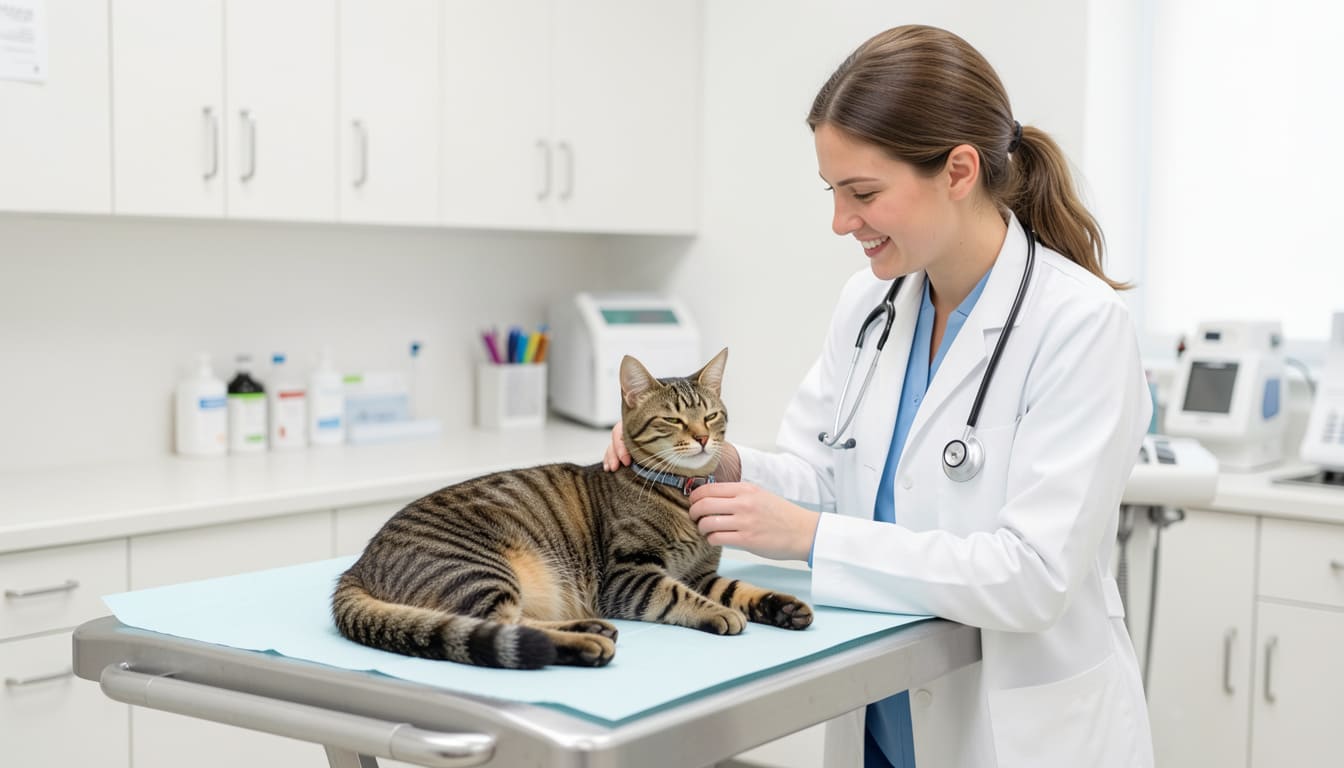
Your veterinarian conducts the physical exam and fills out the health certificate form. This is a clinical document confirming your pet’s health, vaccination status, microchip number, and any treatments the destination country requires.
The CFIA then reviews and endorses that certificate. The endorsement is the government stamp that gives the document legal standing for international travel. Most destination countries will not accept a health certificate without this government-level endorsement.
Which CFIA export certificate your destination needs
The form depends entirely on where your pet is going. The CFIA maintains country-specific health certificate templates for most destinations, listed by country on its pet export certificates page. Endorsement is by appointment with an official CFIA veterinarian, and it cannot be done after your pet has left Canada. Some key points:
For travel to the United States, the requirements changed in 2024. For a dog that has only been in Canada or another rabies-free or low-risk country in the past six months, the CDC Dog Import Form receipt is the only required documentation. The CDC keeps the current rules and its Dog Importation Navigator on its Bringing a Dog into the U.S. page.
For travel to EU countries, the certificate must follow EU format requirements and include microchip details, rabies vaccination dates, and any required rabies titre test results.
For travel to Australia, Japan, or other countries with complex import rules, the CFIA has specific bilateral certificate forms. Using the wrong form results in rejection.
Where no bilateral form exists, the Canadian International Health Certificate is used instead, and it has to carry every condition the destination sets. Argentina, Chile, China, Egypt, Panama and Vietnam all work this way. Turkey goes further, with a certificate sourced from Türkiye that your veterinarian completes twice. Norway has its own CFIA form, HA3152, and Poland travels on the EU animal health certificate.
Your veterinarian should confirm which form applies to your destination. If they are unfamiliar with the destination’s requirements, a pet relocation specialist can provide the correct form and instructions.
Timing: when to book the vet visit and the CFIA appointment
The timing is strict, and working backwards from your travel date is the only reliable approach:
Most health certificates are valid for 10 days from the date of the veterinary exam. Some countries allow longer validity, but 10 days is the common standard. That means your vet visit must happen within 10 days of departure.
After your vet completes the certificate, an official CFIA veterinarian endorses it at an appointment. The CFIA’s pet export page, read 1 October 2026, says the appointment is required and asks for as much advance notice as possible when you book it.
Working backwards from the flight: the vet exam and the CFIA appointment both have to fall inside the window your destination sets, with the exam first, so book the appointment as soon as the flight is set.
For destinations with complex requirements (titre tests, import permits, multi-step treatments), start the process months ahead. The health certificate itself is the final step, but the prerequisite steps can take 3 to 8 months.
Cost breakdown
The costs stack up from several sources:
Veterinary exam and certificate completion: $75 to $200 CAD, depending on your clinic and the complexity of the destination’s form. Some clinics charge extra for international health certificates because they require more time and documentation than a standard checkup.
CFIA endorsement fee: the CFIA does not publish a flat rate for a pet export certificate. Its appointment page says the service fee is calculated for you by a CFIA officer, so the amount is settled at the endorsement appointment rather than in advance. The American figure is published, and it is useful for scale: the USDA charges USD $101 to $275 per certificate, depending on how many laboratory tests the destination requires. Either way the certificate is per animal, so a two pet move means two exams, two certificates and two endorsements.
Rabies titre test (if required): the lab fee is about USD $79 to $90, and the sample is couriered to a US lab such as Kansas State. Japan’s and the European Union’s lists of designated laboratories, both read 28 September 2026, name none in Canada. With your vet’s blood draw fee and the courier, budget $230 to $450 CAD all in. It must be done at an approved laboratory, and results can take 2 to 4 weeks.
Additional vaccinations or treatments: some destinations require specific treatments (tapeworm, tick, internal/external parasite) that your pet may not have had. Cost varies by treatment.
Total: add the veterinarian’s fee and the CFIA’s fee for each animal, then the titre test and any treatments your destination asks for.
The Certificate Is a Trip Document, Not a Passport
An EU animal health certificate is not a pet passport, and an owner living in Canada cannot get the second. Our guide to pet passports and Canada sets out the difference, what Great Britain asks for, and when an owner can get one.
A European pet passport is valid for the life of the animal, for as long as the health records inside it stay current. An EU animal health certificate is tied to one journey. For a pet arriving in the EU it must be issued by an official state veterinarian not more than 10 days before arrival, and from that date it covers onward travel between EU countries for 6 months, or until the rabies vaccination expires, whichever comes first.
Canada’s position inside that system is favourable and worth stating plainly: Canada is a listed country for EU rabies purposes, so a pet moving directly from Canada does not need a rabies antibody titre. That is the step that adds three months to a move from most of the world, and Canadian owners skip it.
What delays travel most often
These are the issues that come up most often when pet owners handle the certificate process themselves:
Wrong form. Each country has its own template. Using a generic veterinary certificate when the destination requires a bilateral form means starting over.
Leaving before the endorsement. This is the one that cannot be repaired afterwards, and the CFIA states it plainly: endorsement of a pet export certificate cannot be done after the animal has left Canada. A pet driven across the border ahead of its paperwork, or flown out on a certificate that later turns out to need a correction, cannot be fixed from the destination. The endorsement appointment has to happen while the animal is still in the country, which is why it is booked into the plan rather than added at the end.
Expired certificate. If your travel gets delayed by even a day past the validity window, you need a new exam and a new endorsement. Build a buffer into your timeline.
Missing microchip scan on the form. The microchip number must be recorded on the health certificate and must match the number in your pet’s vaccination records. Mismatches cause delays at customs.
Incomplete treatment records. If the destination requires proof of a treatment administered on a specific date (like the UK’s tapeworm treatment 24 to 120 hours before arrival), that date and treatment must appear on the certificate.
CFIA office hours and closures. CFIA district offices are not open on weekends or statutory holidays. If your vet visit falls on a Thursday before a long weekend, you may not get the endorsement in time.
How we help with the CFIA process
Ready to start planning your pet’s move?
Request a quote and we will put together a detailed plan and price for your specific route.
Prefer to talk? Give us a call at 1-877-707-1739.
Sources
Checked in August 2026 against the authorities that actually set these rules:
- CFIA, Pets (dogs, cats and ferrets): Export certificates, the country-by-country certificate list and the endorsement appointment booking.
- CDC, Bringing a Dog into the U.S., for the rules that apply to Canada to United States moves.
Frequently asked questions
Can my regular vet do an international health certificate?
Any licensed Canadian veterinarian can complete the clinical exam and fill out the form. However, not all vets are familiar with the specific requirements for every destination. If your vet has not done international health certificates before, they may need extra time, or you may want to ask for a referral to a vet who handles them regularly.
Do I need a separate certificate for each pet?
Yes. Each animal requires its own health certificate and CFIA endorsement. If you are shipping two dogs, that is two exams, two certificates, and two endorsement fees.
What if my flight gets cancelled after the certificate is issued?
If you can rebook within the certificate’s validity period, the existing certificate is still valid. If the delay pushes you past the validity window, you will need a new exam and new endorsement. This is one reason to build at least 2 to 3 days of buffer into your travel timeline.
Is the CFIA endorsement the same as a pet passport?
No. The European pet passport is kept for pets whose owners live in the EU, and the CFIA’s EU page says Canada is not involved in issuing it.
A pet leaving Canada for the EU travels on the EU animal health certificate this guide covers.
Crossing into the United States by road runs on a different set of rules from the export certificate this guide covers. Our guide to driving to the United States from Canada with a pet covers the free CDC form, the microchip and age requirements, and what Canada asks for on the way home.
For what happens at the border itself, and which parts of it you can handle without help, see clearing a pet through Canadian customs.
Last updated